
A SOC 2 report is an audit firm's independent report on how a service provider protects the data it handles for its customers, measured against the AICPA's five Trust Services Criteria, of which only Security is mandatory. It comes as Type I or Type II, and a Type II report covers an observation period of typically three to twelve months. For a growing tech company, the report is what enterprise customers ask for before they trust you with their data, which is where most of the benefits below come from.
- SOC 2 ensures the protection of sensitive data and compliance with key security standards such as GDPR and ISO 27001
- It provides a competitive advantage through trust and a robust IT infrastructure
- SOC 2 is particularly relevant for data-sensitive industries such as finance and data centers
- Scalable security foundation for sustainable business growth
SOC 2 Compliance: Why Growing Companies Should Prioritize Secure Data Management
Information security is a common challenge for all organizations that outsource their key business operations to external service providers, e.g., cloud computing, payment processors, and other third-party data processors. Even slight mismanagement or mishandling of sensitive data by these SaaS providers can result in serious information security consequences for enterprises.
Such risks can undermine the enterprises' return on investment with IT providers. As a caution, for increased productivity and reduced business risks, most security-conscious enterprises partner with firms that have a SOC 2 report. Compliance with SOC 2 ensures that SaaS providers adhere to five stringent conditions established by AICPA for securely managing their clients' data.
Growing tech companies, for a myriad of reasons, should consider a SOC 2 report. Key benefits of a SOC 2 report include building customer trust, gaining competitive advantage, meeting clients' requirements, and establishing a foundation for secure growth as the firm scales and the complexity of its IT infrastructure increases.
Key benefits of SOC 2 Report
Meeting compliance requirements
SOC 2 audits enhance the overall security posture of an organization. Its effect gets evident in meeting compliance requirements with data protection regulations like GDPR and information security standards like ISO 27001. Five trust principles, including security, confidentiality, availability, privacy, and integrity of data, are also key requirements under the aforementioned frameworks.
Kutluhan Abut, Information Security & AI Governance Specialist, clears up the misunderstandings that come up most often in a SOC 2 audit, starting with what a report does and does not tell a buyer.
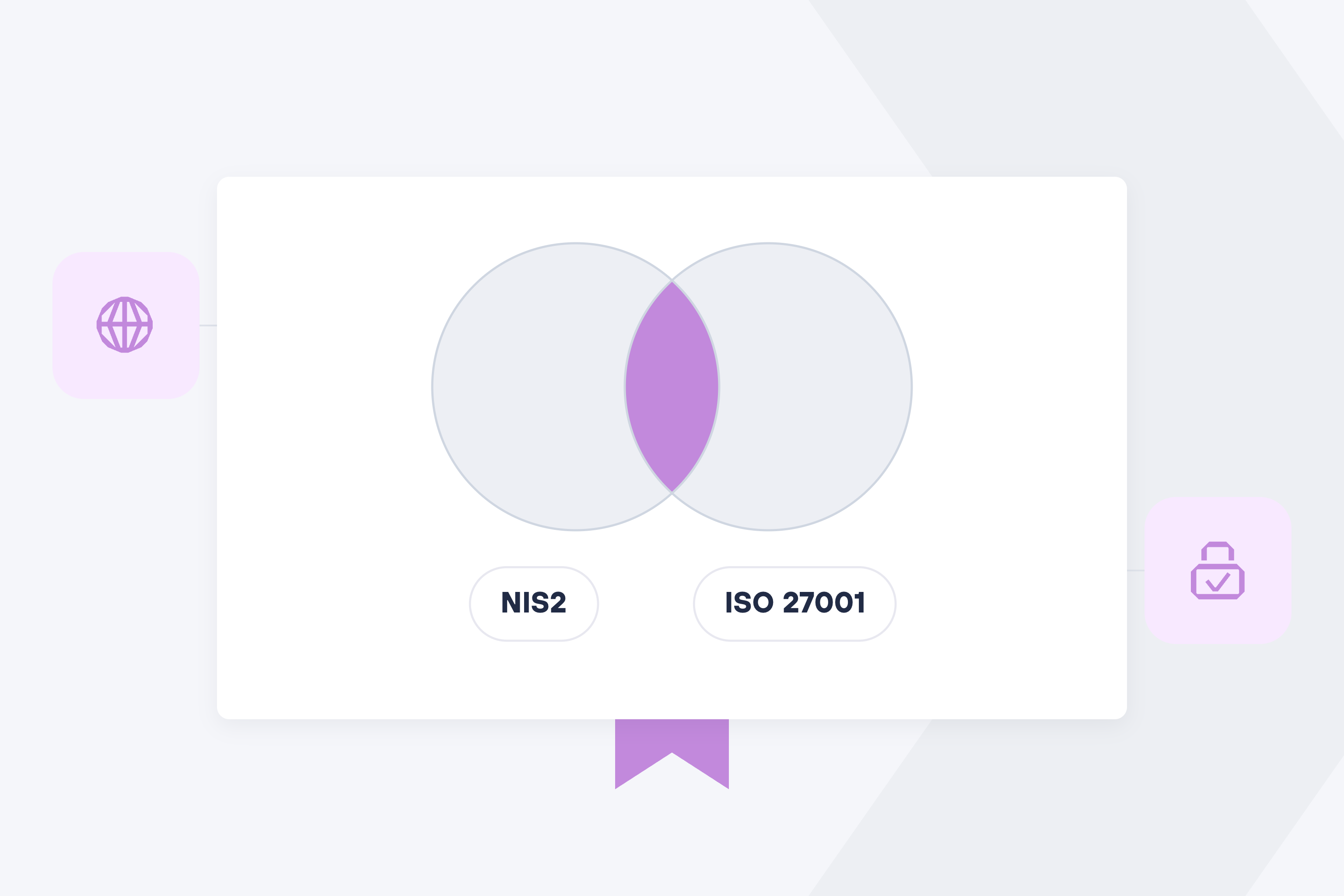
While compliance with SOC2 is frequently the baseline requirement that enterprises see in service providers, it also sets benchmarks for responsible data handling practices that fit well with the stringent requirements under GDPR and ISO 27001. It is important to note that a SOC 2 audit only partially suffices for ISO 27001 certification or compliance with GDPR.
There are many key areas of overlap among all three frameworks, including data privacy and security. SOC 2 includes data privacy as one of the trust service criteria, emphasizing how personal information is collected, used, retained, disclosed, and disposed of to fulfill the organization's objectives.
A similar approach to protecting the privacy of individuals is encapsulated under Article 5 of GDPR, outlining the principles pertaining to the processing of personal data. It covers lawfulness, fairness, and transparency; purpose limitation; data minimization; accuracy; storage limitation; and integrity and confidentiality. Under ISO 27001:2022, data privacy is primarily addressed under Annex A.5.34 (privacy and protection of personally identifiable information).
Information security, another criterion under AICPA's Trust Service Criteria, shares common ground with major frameworks that impact businesses' operations. The security criterion under SOC 2 ensures that information and systems are protected against unauthorized access, unauthorized information disclosure, and any damage to systems. Similarly, under ISO 27001: 2022, access control, communications security, and system operations address the same objective.
Overall, a SOC 2 report simplifies a great deal of work in fulfilling compliance with the other two frameworks. With a SOC 2 report, you have the leverage to kill two (or more, e.g., HIPAA) birds with one stone.
Gaining a Competitive Advantage
The average lifecycle of data breaches lasts for 277 days (IBM Cost of a Data Breach Report 2023). Vendors with a SOC 2 report have better chances to identify and mitigate such risks. A SOC 2 audit ensures that a company has adequate protection against data breaches. This protection extends to third-party vendors and business partners in the supply chain, translating into a significant competitive advantage. An organization seeking SaaS will unarguably favor the one they can invest in to leverage an already existing robust IT infrastructure.
Imagine competing against companies with a SOC 2 report in a bid to seal a deal with an organization seeking software as a service! Vendors with SOC 2 audit reports are positioned as clear differentiators when competing for potential clients. Customers are more likely to instill confidence in service providers who display a SOC 2 badge on their website, product page, or social media. This way, a firm with a SOC 2 report organically gains brand promotion.
As per McKinsey Digital, more than half of the customers like to do business with those digital services that have a well-established reputation for protecting their data. Businesses are keen on spending a bit more than facing the adversities of data breach-induced ransomware or regulatory penalties. In light of this, growing tech companies with a SOC 2 report can benefit from strategic investments by companies that prefer to invest in data security regardless of the cost.
Industry-Specific Benefits
SOC 2 is beneficial for all industries that handle sensitive customer data (and therefore data security becomes paramount), such as healthcare, finance, SaaS, and legal services. Here we elaborate on two industries to highlight key areas where SOC 2 helps.
Banking and financial services
Banking and financial services providers, including banks, credit card companies, insurance companies, and stock brokerages, etc. deal with financial data. Financial data is classified as sensitive data under key privacy regulations like GDPR and CCPA. These regulations require entities dealing with sensitive data to handle it with the utmost care.
This includes maintaining confidentiality and privacy, as well as the completeness, timeliness, and accuracy of transactions. Processing integrity as a criterion under SOC 2 enables financial institutions to process all transactions correctly and within expected timeframes.
Logical security and physical security are two main areas of concern in financial institutions. SOC 2 provides limited considerations for physical security (under the security and availability criteria, such as secure access to physical locations). However, it enables organizations with logical security (e.g., access controls, encryption, and system monitoring) to ensure customer data is safeguarded against cyber threats.
Data centers and colocation facilities
Adata center stores sensitive information on behalf of many companies in one place. For a data center to be even slightly compromising in terms of data security can't be tolerated. In the event of a breach, it risks exposing a vast amount of sensitive data to the wrong hands.
Any company before entrusting a data center with their data scrutinizes its internal controls or colocation facility. A SOC 2 report can assure these companies that the data center has the highest levels of data security procedures in place to safeguard their information assets.
Conclusion
This particular age has tonnes of perks, but it doesn't come without flaws. Cybersecurity is the key challenge that all data-driven companies have to deal with, even if they don't wish to. Either compliance with regulatory frameworks like GDPR or gaining customer trust could be the driving factor behind maintaining robustness in data privacy, security, availability, and processing integrity.
Compliance with the SOC 2 framework addresses all of the aforementioned criteria effectively. While a SOC 2 report is not mandatory, it is advantageous in multiple ways. We, at Kertos, can enable you to gain that competitive edge. Contact us today for a free consultation regarding your audit needs.