
Key takeaways
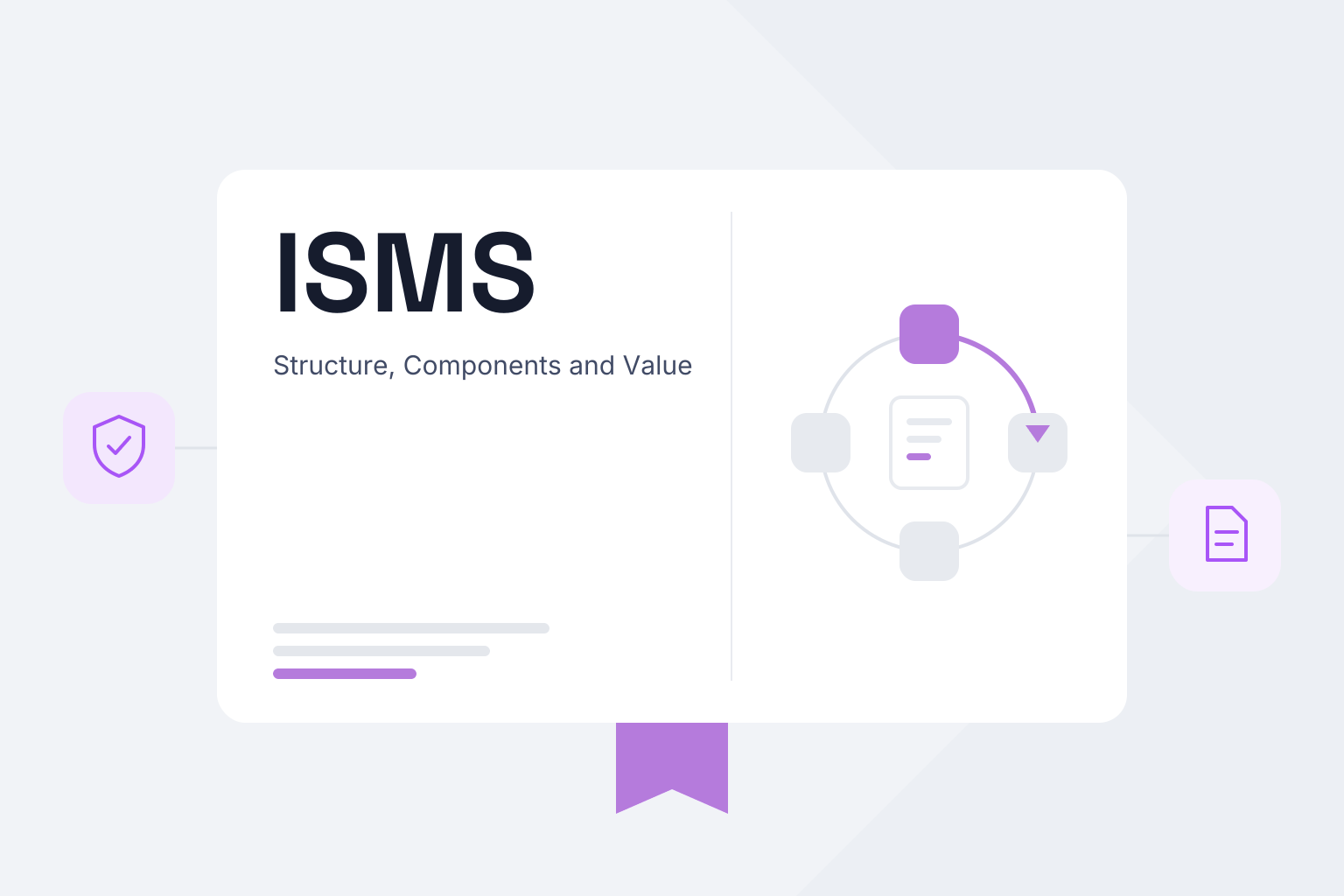
- An ISMS is a documented management system that protects three properties of information: confidentiality, integrity, and availability. It consists of five components: policies, risk assessment, controls, incident management, and continual improvement.
- ISO/IEC 27001 sets out in clauses 4 to 10 what an ISMS has to deliver. Annex A lists 93 controls in four categories: 37 organizational, 8 people, 14 physical, and 34 technological.
- You do not have to implement all 93 controls, but you do have to assess every one and justify its inclusion or exclusion. That justification lives in the Statement of Applicability, one of the mandatory documents in the certification audit.
- The current version is ISO/IEC 27001:2022, Edition 3 from October 2022, extended by Amendment 1:2024 on climate action. Certificates issued against the 2013 version have been invalid since October 31, 2025.
- An ISMS and a certification are not the same thing: the ISMS is the system you operate, the certification is the confirmation issued by an accredited certification body. A certificate is valid for three years, with surveillance audits in years one and two.
What is an ISMS?
An ISMS (information security management system) is the system of rules, roles, processes, and controls through which a company plans, implements, reviews, and continually improves the protection of its information. It defines which information is protected, which risks it faces, which measures apply against them, and who is responsible for what. The authoritative standard for it is ISO/IEC 27001. Its clauses 4 to 10 set out which requirements such a system has to meet, from determining the scope through the risk assessment to the management review.
What separates it from a collection of individual security measures is structure. A house built to a plan and a house that gained a room whenever somebody felt like it are both technically houses. Only one has foundations that hold. An ISMS supplies that plan: every policy, every control, and every procedure is tied to a stated objective and can be traced back to it.
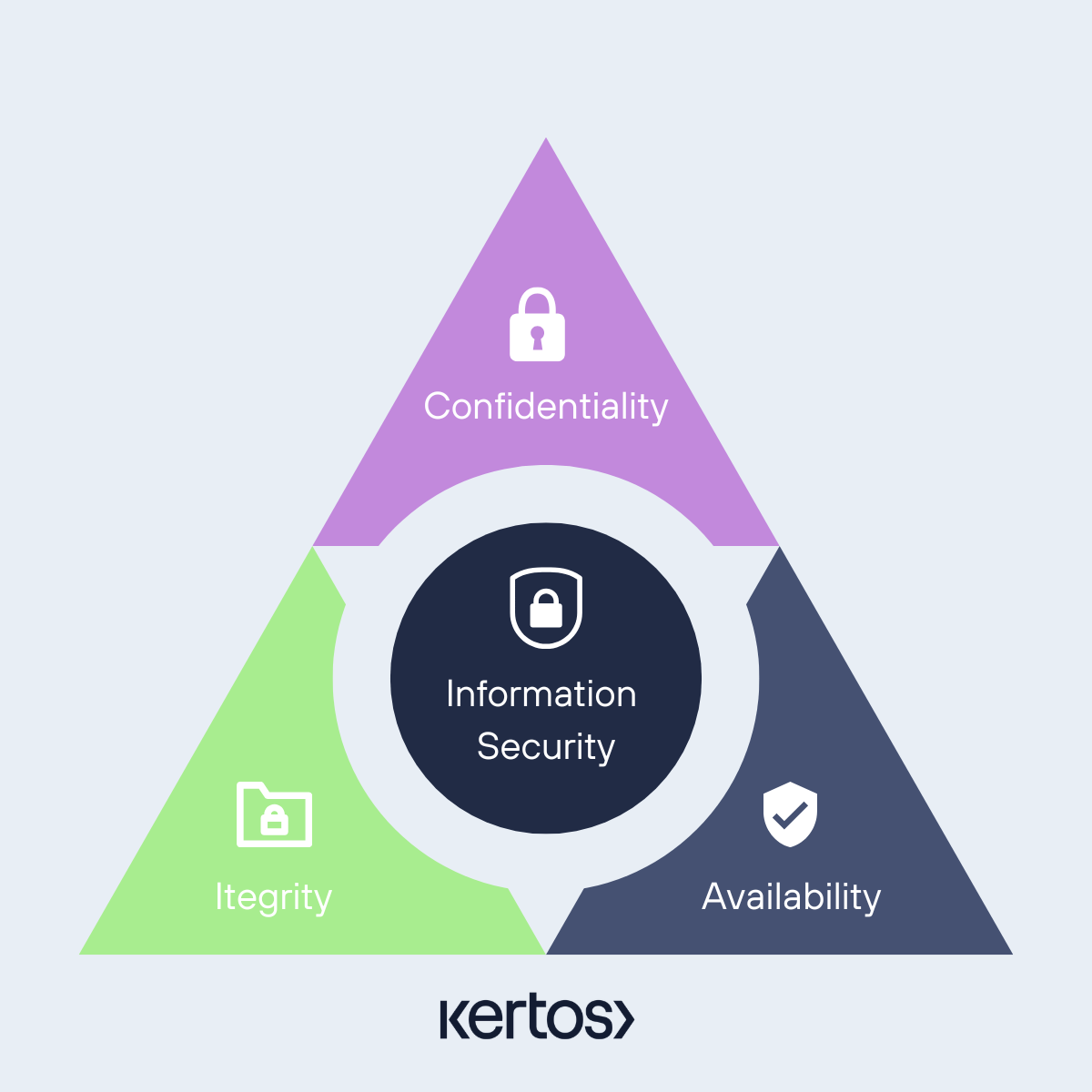
What gets protected are three properties of information, often called the CIA triad (confidentiality, integrity, availability). Confidentiality means only authorized people have access. Integrity means information stays accurate and unaltered. Availability means authorized people can reach it when they need to. Every measure in your ISMS ultimately serves one or more of those three goals.
A common misconception: an ISMS is not software and not a folder of documents. Software can collect evidence and track deadlines, and documents are part of the system; the ISMS itself is the way your company makes decisions about information security. Buy a template pack, file it unchanged, and you have documents but no management system. That is exactly the difference that shows up in an audit.
The second defining difference is the risk basis. Rather than implementing measures on instinct or reacting only after an incident, an ISMS requires you to name your own risks, assess their likelihood and impact, and select controls in proportion. Limited resources then land where they matter. Our guide to ISO 27001 certification shows how a running ISMS turns into a certificate, which audit stages are involved, and what the certificate actually states.
ISMS, IT security, and data protection: how they differ
The three terms are often used interchangeably, but they cover different ground. An ISMS is the widest frame: it covers all of a company's information, whether it sits in a cloud application, on paper, or in an employee's head.
| ISMS | IT security | Data protection | |
|---|---|---|---|
| Subject | All of the company's information, digital, on paper, and as knowledge held by people | IT systems, networks, and applications | Personal data |
| Goal | Manage and demonstrate confidentiality, integrity, and availability | Protect systems technically against attacks and outages | Protect the rights of the people the data is about |
| Typical basis | ISO/IEC 27001 | Technical measures such as patching, firewalls, and backups | GDPR and national data protection law |
| Example question | Who may view customer contracts, and how is that checked? | Is the server patched? | May this customer database be used for the newsletter? |
IT security is therefore part of an ISMS, not a substitute for it. An ISMS overlaps with data protection wherever personal data is involved: the technical and organizational measures required by Article 32 GDPR can be implemented and evidenced through an ISMS.
Which standards an ISMS can be built on
ISO/IEC 27001 is the internationally authoritative standard for an ISMS and can be certified by an accredited certification body. In Germany, three other bases are common:
- BSI IT-Grundschutz: the methodology of the German Federal Office for Information Security, common in public authorities and among operators of critical infrastructure. It can be certified as ISO 27001 on the basis of IT-Grundschutz.
- VdS 10000: a standard from VdS Schadenverhütung GmbH for small and mid-sized companies and municipalities, considerably narrower than ISO 27001 and upward-compatible with it.
- TISAX: the automotive industry's assessment standard, based on the VDA ISA catalog. It ends not in a certificate but in an assessment and a TISAX label.
Your customers usually decide which standard fits: if you sell internationally, you will generally need ISO 27001; automotive suppliers need TISAX.
What an ISMS looks like day to day
You recognize a running ISMS less by its documents than by its recurring routines. In a company of 200 employees, a typical year looks roughly like this:
- Access rights are reviewed regularly, and onboarding and offboarding follow a fixed process for granting and removing access.
- The risk register is updated with every significant change, such as a new cloud service or a new location, and reviewed in full at least once a year.
- Security incidents are reported, assessed, and documented, even when no damage resulted.
- All employees complete security awareness training, new hires as soon as they start.
- Once a year, an internal audit checks whether the ISMS works, and management assesses the results in the management review.
These records are exactly what an auditor will want to see later: not the policy, but evidence that it was lived for months.
Why do companies need an ISMS?
For companies, an ISMS often decides whether a customer deal closes at all. Enterprise procurement, investors, and partners ask early for demonstrable security practices, and the question rarely arrives at the end of the process.
The mistake many managing directors of small companies make: they treat information security as a topic for companies of 200 people and up. Headcount is not what determines sensitivity. A team of twelve can process payment data, store personal data subject to the GDPR, and hold credentials to customer systems. Your exposure follows what you manage.
Take a 45-person SaaS company bidding for an enterprise account. Procurement sends a security questionnaire with roughly 120 questions, legal wants a data processing agreement with an annex on technical and organizational measures, and IT security asks for the Statement of Applicability. Without an ISMS, management answers from memory, spread across two to three weeks, and every answer is an assertion. With an ISMS they are extracts from documents that already exist.
The second effect shows up as you grow. In the early days security runs on informal practice and tacit knowledge, and that approach breaks the moment you hire faster than you can explain. Documented access control policies, defined provisioning processes, and traceable training records are the difference between "someone talked the new colleague through it" and "the process ran and the evidence is on file".
A third argument gets overlooked: security decisions happen earlier. When information security sits inside the ISMS, a new tool, a new integration, or a new supplier is assessed before it goes live rather than repaired afterwards. That is cheaper, and it stops sloppy processes from setting hard over the years.
What are the five components of an ISMS?
A working ISMS rests on five components that build on each other. Tick them off individually and you get documents. Keep them in order and you get a system.
1. Policies
Policies are the foundation. They set out which rules apply across the company, and they are the part of the ISMS most often lifted from the internet unchanged. A typical set for a small company is one overarching information security policy plus specific policies on acceptable use, access control, data classification, incident response, and supplier management.
What matters is that they match reality. If your acceptable use policy forbids something your team does daily, it is not strict, it is inert, and an auditor finds the gap in the first interview. Effective policies describe in plain language what people are actually meant to do, and name the consequences of not doing it.
2. Risk assessment and risk treatment
This is where the ISMS gets tailored to your company. You build an inventory of information assets: customer data, source code, financial and personnel data, intellectual property, and the systems that process all of it. For every significant asset you name realistic threat scenarios, assess likelihood and impact, and decide how to handle the risk.
You have four options: reduce the risk through controls, transfer it through insurance or contracts, avoid it by changing a practice, or knowingly accept it if it sits within your defined risk tolerance. ISO 27001 requires a documented methodology but does not prescribe which one. The output lives on in the risk register, which is maintained for the full life of the ISMS.
3. Controls
Controls are the concrete mechanisms that reduce risk: technical ones such as encryption and multi-factor authentication, physical ones such as access restrictions and device security, and organizational ones such as policies, training, and defined processes. Annex A of ISO/IEC 27001:2022 groups them into four categories.
| Annex A category | Number of controls | Reference range |
|---|---|---|
| Organizational controls | 37 | A.5.1 to A.5.37 |
| People controls | 8 | A.6.1 to A.6.8 |
| Physical controls | 14 | A.7.1 to A.7.14 |
| Technological controls | 34 | A.8.1 to A.8.34 |
| Total | 93 | A.5 to A.8 |
You do not have to implement all 93, but you do have to assess each one and justify any exclusion. Those justifications form the Statement of Applicability, which shows auditors that your selection is risk-based and traceable. Our breakdown of all 93 Annex A controls shows which control covers which requirement and which eleven controls were added in 2022.
4. Incident management
Even good security programs have incidents. The difference lies in the response. Your ISMS should define how security events are detected, how you assess whether an incident has occurred, how it is contained, eradicated, and recovered from, and how the lesson gets captured.
For a small or mid-sized company, that does not mean running a security operations center around the clock. It means a written playbook, named roles, tested communication paths, and a deadline within which notification to authorities or customers is assessed. When the first significant incident arrives, that playbook decides whether the response is coordinated or improvised.
5. Continual improvement
An ISMS is not a project with an end date. The threat landscape changes, your company changes, and the system has to keep up with both. That means internal audits that check whether controls work as described, management reviews that judge the overall state, and a process for corrective action. ISO 27001 requires this cycle explicitly in clause 10.
ISMS and ISO 27001: what is the difference?
The ISMS is the system you build and operate. ISO/IEC 27001 is the international standard that defines what a credible ISMS looks like, and certification is the confirmation from an independent body that yours meets the requirements. You can run an ISMS without a certificate; without one you lack the proof that procurement departments want to see.
The standard requires a set of documented information. That list is the most practical entry point into the question of what an ISMS actually is on paper.
| Documented information | Clause of ISO/IEC 27001:2022 |
|---|---|
| Scope of the ISMS | 4.3 |
| Information security policy | 5.2 |
| Information security risk assessment process | 6.1.2 |
| Risk treatment process and Statement of Applicability | 6.1.3 |
| Information security objectives | 6.2 |
| Evidence of competence of the people involved | 7.2 |
| Results of monitoring and measurement | 9.1 |
| Internal audit programme and audit results | 9.2 |
| Results of the management review | 9.3 |
| Evidence of nonconformities and corrective actions | 10.2 |
The current version is ISO/IEC 27001:2022, Edition 3 from October 2022, extended by Amendment 1:2024, which adds climate action to clauses 4.2 and 6.1.2 and leaves Annex A untouched. The transition period from the 2013 version ended on October 31, 2025; certificates on the old basis have been invalid since. The current status of the standard is available in the official ISO listing.
A certificate is valid for three years. Surveillance audits follow in years one and two, with recertification in year three. We have written up separately how long an ISO 27001 certification takes and what the duration depends on.
The budget question is answered at the same level, broken down by company size and including the line items vendors usually leave out: the cost of ISO 27001 certification.
A cleanly built ISMS is also the foundation for further requirements. The GDPR requires appropriate technical and organizational measures under Article 32, plus accountability and documented processes, which is precisely the set of artifacts your ISMS produces anyway. The same holds for NIS2, although the overlap is not complete: our comparison of where NIS2 and ISO 27001 overlap shows which requirements you already cover with ISO 27001 and which gaps remain.
What mistakes happen when building an ISMS?
Adopting templates unchecked
Templates save time on wording, not on thinking. An adopted policy that does not describe how you actually operate produces exactly the nonconformity your internal audit will surface, and it surfaces before the external auditor arrives. Use the template as an outline and write the content against your own reality.
Miriam Mindt, Information Security Expert, walks through a full certification audit, from the first document review to the year-three surveillance audit. Nine minutes, with chapter markers.
Drawing the scope too wide
A narrow, well-justified scope is not a sign of weakness. It is the most effective lever for keeping a first certification audit realistic, because audit time derives from the number of people in scope. For most small and mid-sized companies, the scope covers the core product and the infrastructure that carries it, not every part of the business.
A narrow scope rarely saves work. Miriam Mindt, Information Security Expert, explains the interfaces it creates, and why they land on your own team rather than on the customer.
Treating the ISMS as a project that ends with the certificate
After the certificate come the surveillance audits in years one and two. If nothing happens between certification and the first surveillance audit, no internal audit, no management review, no updated risk assessment, that is the single most common cause of findings the following year. Build the cycles into your normal operating rhythm instead of catching up before the audit date.
How does Kertos support building an ISMS?
Kertos is a European compliance platform that brings the ISMS build into one system: risk register and risk treatment, the mapping of Annex A controls including the Statement of Applicability, policies with approval and version status, employee training, and automated evidence collection from your existing systems. What otherwise sits spread across spreadsheets, a wiki, and several tools hangs on one set of data.
The second part is the expert support. Kertos customers work with certified experts who help define the scope, review the risk assessment, and read through before the audit. That is where building an ISMS differs from rolling out software: the decisions stay yours, but you do not make them alone. The ISMS module of the Kertos platform shows what that looks like in the product.
In reviews, customers most often single out how far the build of the management system itself is carried:
"Kertos makes building an Information Security Management System incredibly smooth and intuitive."
Konrad E., 4.5 out of 5 on G2
If you want to know where your company stands today, a gap analysis is the quickest way in. It shows which requirements are already met, which are open, and in what order they are sensibly worked through. Book a gap analysis.
Frequently asked questions
What is an ISMS in simple terms?
An ISMS is the way a company manages information security: the policies that apply, the processes that get followed, the controls that are implemented, the people who are accountable, and the mechanisms that monitor and improve the whole thing. Instead of handling security problems as they arise, you decide in advance what gets protected and how.
Is an ISMS a legal requirement?
ISO/IEC 27001 itself is a voluntary standard, and no law requires an ISMS by name. The outcomes are what is mandatory: the GDPR requires appropriate technical and organizational measures under Article 32, and NIS2 obliges in-scope companies to take risk management measures under Article 21. An ISMS is the established way to meet those duties demonstrably, but it is not the only permissible one.
What is the difference between an ISMS and ISO 27001?
The ISMS is your own management system, ISO 27001 is the standard it gets measured against. You can operate an ISMS without being certified. Without certification, though, you lack the confirmation from an independent third party that your practice meets internationally recognized requirements, and that is exactly what enterprise procurement asks for.
Can a company with 15 employees run an ISMS?
Yes. ISO 27001 scales with the size of the scope, not with a minimum company size. A team of 15 usually has a manageable system landscape, fewer processes, and shorter decision paths than a 500-person company; implementation is therefore less complex, not less feasible. What changes is the volume of documentation, not the requirement.
Does an ISMS have to implement all 93 Annex A controls?
No. You have to consider all 93 controls, but only implement the ones that match your risks. For every included and every excluded control you record the justification in the Statement of Applicability. In practice most companies select 60 to 80 of the 93; the selection has to match the risk assessment and be explainable in the audit.